
How To Take Secure Payments Over the Phone Safely Without PCI Compliance Risk

Man wearing a headset smiles while working at a computer, with another headset user typing at a laptop in a bright office background.

Summary: Learning how to take credit card payments over the phone is vital for modern businesses. This guide covers steps to take payments over the phone, ensuring your process remains secure, user-friendly, and professional.

By following these best practices for card payments over the phone, you can:

  • minimize the risk of fraud
  • reduce chargebacks
  • provide a secure, seamless transaction experience for your customers
Many customers still want the option to make a payment or ask questions to a live customer service agent. How can organizations take payments over the phone and still keep payment data secure?

What Are Phone Payments and How Do They Work?

Card payments over the phone are a type of Card-Not-Present (CNP) transaction in which a customer provides payment details during a phone call.

Learning how to take payments over the phone offers flexibility for customers and businesses. It’s important to recognize that these transactions can carry a higher risk than in-person payments.

Because the physical card isn’t present, these payments require manual entry, which can create data security issues. Companies can use secure digital payment software like PDCflow to protect against CNP security risks.

Understanding how to take credit card payments over the phone is vital for any business looking to expand its reach.

SURVEY SAYS:

“Nearly 7 in 10 respondents (69%) said talking to a live agent by phone is one of their top three preferred methods of communication with a company’s customer service department.”
https://www.businesswire.com/news/home/20210727005281/en/TCN-Consumer-Survey-Finds-Americans-Overwhelmingly-Prefer-to-Interact-with-a-Live-Person-When-Dealing-with-Customer-Service-Reps

Why Customers Make Payments Over the Phone

Even with easy self-serve payment options available, a large segment of customers still prefer speaking to a customer service representative.

They may have questions before they pay or simply prefer a human touch. Here are the main reasons customers pay over the phone.

Convenience

Allowing customers to pay the way they want is convenient. Some may not like online payment pages or have a complex problem that can’t be solved by looking at the resources on your website.

Others might find it difficult to navigate self-serve options or don’t have a reliable way to access them when a payment is due. Companies should take payments over the phone to offer convenient options for every situation.

Personalized service

Customers may have a unique request, a complex problem with a bill, want help walking through the steps to a payment. If you accept payments over the phone, you can offer personalized help on a customer-by-customer basis.

Speed

Depending on the customer, paying over the phone may be the fastest option. Customers like having the option to pay without having to mail a check, type in long URLs, etc.

Accessibility

For customers with disabilities or who require accessibility options, self-serve isn’t always easy. Customers who need accessibility features may prefer to speak to a person who can assist them.

Perceived Security

Regulations like Payment Card Industry (PCI) standards govern how organizations accept, process, and manage credit card information. Every merchant who accepts card payments must know these requirements, but most customers don’t know about PCI compliance.

Although taking payments over the phone can open your company to risk, some customers may not trust an online payment system or other automated payment options. Companies should take phone payments securely to keep customer data safe.

“Accepting spoken account data over the telephone puts personnel, the technology used, and the infrastructure to which that technology is connected into scope of PCI DSS.”
Source: PCI Security Standards Council: Protecting Telephone Based Payment Card Data Guide

Why Companies Take Payments Over the Phone

Companies need to cater to as many customers as possible. Because agent-assisted payments are one part of a multichannel payment experience, organizations may feel obligated to take payments over the phone. But offering phone payments can be a benefit too.

Increased Revenue and Fewer Abandoned Payments

The more ways you let customers pay, the more money you will receive. Self-serve payment systems have higher abandonment rates and are more susceptible to fraud. Paying over the phone with a credit card or bank account number can make it easier for customers to follow through with a payment.

Payment Accuracy

People make mistakes. Customers might type in their payment information incorrectly or miss a required field during an online payment and become frustrated.

When agents take payments over the phone, they can stand by during transactions to make sure they go through. Staff can address problems immediately.

Customer service

Quality customer service means better reviews and higher customer satisfaction. Companies that take payments over the phone can identify and handle problems immediately, meaning faster resolutions.

SURVEY SAYS:

“After a positive customer service experience, 3 in 10 (33%) said they post an online review. Conversely, after a poor customer service experience, 4 in 10 (42%) said they have posted an online review.”
https://www.businesswire.com/news/home/20210727005281/en/TCN-Consumer-Survey-Finds-Americans-Overwhelmingly-Prefer-to-Interact-with-a-Live-Person-When-Dealing-with-Customer-Service-Reps

Limitations to Taking Payments Over the Phone

Taking ACH payments and credit cards by phone is a great way to serve customers. But as with any process, there may be a few limitations that can make it hard to offer a secure, trustworthy payment process over the phone.

Fear of fraud

Just as some customers may think it’s safer to trust their data to an agent, others will worry about reading payment information out loud. After all, customers don’t know who is on the other end of the transaction and don’t know how information is stored.

Your organization should follow PCI compliance for card payments and Nacha regulations for ACH transactions.

Your company should also block employees from hearing, seeing, or accessing private payment data (during transactions and afterwards). This prevents data breaches and increases trust in your business.

Human error

Customer service representatives also run the risk of typing payment data incorrectly, accessing the wrong files, or sending incorrect information to a customer. This can harm your business reputation and cause problems during payment reconciliation.

To take payments over the phone, use payment software like PDCflow that creates safeguards and prevents errors from occurring by:

  • limiting staff access to only the information they need

  • storing payment data so your company can manage risk

  • allowing customers to key in their own payment information while still on the phone with an agent

Customer dissatisfaction

If your organization takes payments over the phone, make sure call routing, phone menus, and other technical aspects of your customer service line work right.

Convenient options boost customer satisfaction, but if the customer experience doesn’t match up to what’s promised, your company risks damaging your reputation.

Credit Card Payment Security and Compliance Risks

Accepting credit card payments over the phone means your company must follow PCI compliance requirements. Specifically, your organization can not use voice recording software that might capture and store payment data from a customer’s transaction.

Simply allowing staff to hear card numbers can also expose your company to more risk. If an employee writes a credit card number on a piece of paper, that paper becomes a liability for your organization (especially if you allow agents to work from home).

Traditional Ways to Take Payments Over the Phone (And Why They Fall Short)

Businesses often rely on traditional methods to take card payments over the phone. These methods may work to process a payment, but they often expose customer card data to security risks.

Manual entry into a physical or virtual terminal, or a mobile payment app, requires customers to read card numbers aloud.

Taking card numbers over the phone or storing them on paper creates greater PCI compliance responsibility and increases the chance of a data breach or theft.

Best Practices for Taking Secure Payments Over the Phone

To maintain PCI compliance for call centers in over-the-phone payments, companies should avoid manual card entry. Instead, follow modern best practices for how to take a card payment over the phone.

  • Never write down card data: Physical records must be properly secured or disposed of, and can be a source of internal fraud.
  • Let customers enter their own card details: Empowering customers to enter their payment details makes them feel more secure while paying.
  • Use secure delivery methods: The most secure way to take card payments over the phone is to send a payment link to their mobile number or email address. The customers complete the request, and agents get payment confirmation in real-time.

How Secure Phone Payments Build Customer Trust

Understanding how to take payment over the phone is central to building trust with customers.

Many customers worry about fraud during phone payments. By prioritizing security, you show customers that you value their data privacy.

Offering a secure way to take phone payments shows professionalism and puts customers at ease, which leads to:

  • Faster payment completion

  • Fewer complaints

  • Fewer chargebacks
PDCflow

PDCflow for PCI Compliant Agent-Assisted Payments

Flow Technology for PCI Compliant Agent-Assisted Payments

Fast, Secure, Compliant Phone Payments With PDCflow

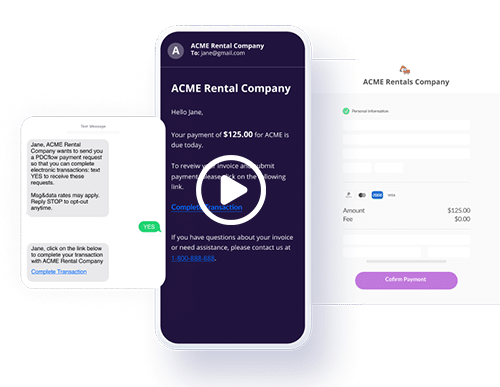
PDCflow email and SMS payment requests let agents send a secure payment link to customers while they are still on the phone with an agent.

Customers can open the message, key in their card or bank account information, and complete a payment–all while they’re still on the line with your staff.

  • Flow requests prevent agents from having to key in payment numbers. Customers can enjoy a personal touch without worrying about fraud or mishandled data.
  • PDCflow’s organization hierarchies let administrators control who can access workflows, templates, or reporting. This keeps customer information secure and reduces human error.

FAQs

For more information on how to take secure agent-assisted payments, even with remote workers, book a demo with a PDCflow payment expert today.

Book a Demo:

Want to know more about PDCflow Software?

Press ▶️ to watch our explainer video

See how our PDCflow can create a one-step workflow for your contracts/invoices and payments. Book a demo today.
Book Demo

ONE-STEP PROCESS

Consolidate multi-step processes into one easy step for your staff and customers. Eliminate the need for multiple software vendors. Send all your business transactions in one Flow smart request.
Learn more
- ABOUT THE AUTHOR -
Hannah Huerta - PDCflow Marketing Specialist
Hannah Huerta, Marketing Specialist

Hannah Huerta is a Marketing Specialist at PDCflow. She creates content for the accounts receivable and payment industry.

LinkedIn - Hannah Huerta
Related Articles
Call Center PCI Compliance: Keeping Agent Payments Safe8 Digital Methods of Payment to Upgrade Customer Experience