
Every call center interaction is an opportunity to increase revenue. Successful call center strategies for payment plans or late accounts make sure your team doesn’t leave money on the table.
Managers can use call center strategies to encourage better calls that empower agents to:
- Collect more payments
- Support more customers
- Cut down on repetitive manual work
Successful Call Center Strategies For Payment Collection
Strong payment collection processes involve the right mix of training, technology, and workflows.
Below are some of the most effective call center strategies to improve payment success:
- Set up recurring payment schedules to automate future charges.
- Apply payment negotiation strategies to secure commitments and improve recovery rates.
- Reduce late payments through better communication and digital tools.
These approaches help agents collect faster and spend less time chasing balances.
Better Recurring Payment Plans
Recurring payment schedules are a flexible option to help customers manage bills through installments.
These structured payment plans lead to predictable cash flow, fewer missed payments, and stronger customer relationships. Automated recurring payments are one of the most effective call center strategies that:
- Continually increase your revenue
- Save customers time and the work of making manual monthly payments
- Eliminate manual follow-up work for staff
Call centers need to create clear internal guidelines for recurring billing. That way, agents know how to set up realistic payment schedules that benefit both the customer and your organization.
Here are a few proven best practices to improve success rates when discussing recurring payment options:
1. Higher monthly payments
When offering recurring billing schedules, agents should identify a customer’s threshold. Then, they may suggest slightly higher payments (for example, $10 or $15 more).
Most customers are open to small increases if it means they’ll pay off their balance faster. This improves your collection rate and demonstrates a commitment to helping them resolve their accounts efficiently.
2. Recommend Shorter Schedules
Rather than spreading payments over long periods, agents can offer short-term payment plans that get customers motivated to pay. Suggesting three- to six-month terms helps customers stay committed, simplifies tracking, and improves completion rates.
3. Secure Down Payments
When customers make an initial payment upfront, they’re more invested in following through on their recurring schedule. Encourage agents to request a reasonable down payment to create momentum and ensure early revenue.
4. Avoid Discussing Minimum Payments
When customers ask about the minimum they can pay, it can anchor them to the lowest possible amount. Instead, train agents to focus on solution-based conversations about affordability and flexibility, rather than minimums. This approach keeps the discussion centered on value, not limits.
5. Use Payment Software to Simplify the Process
A secure, compliant billing and payment software like PDCflow helps call centers manage recurring billing more efficiently. Built-in compliance, tokenized data storage, and automated recurring payments mean agents spend less time managing payments and more time assisting customers.
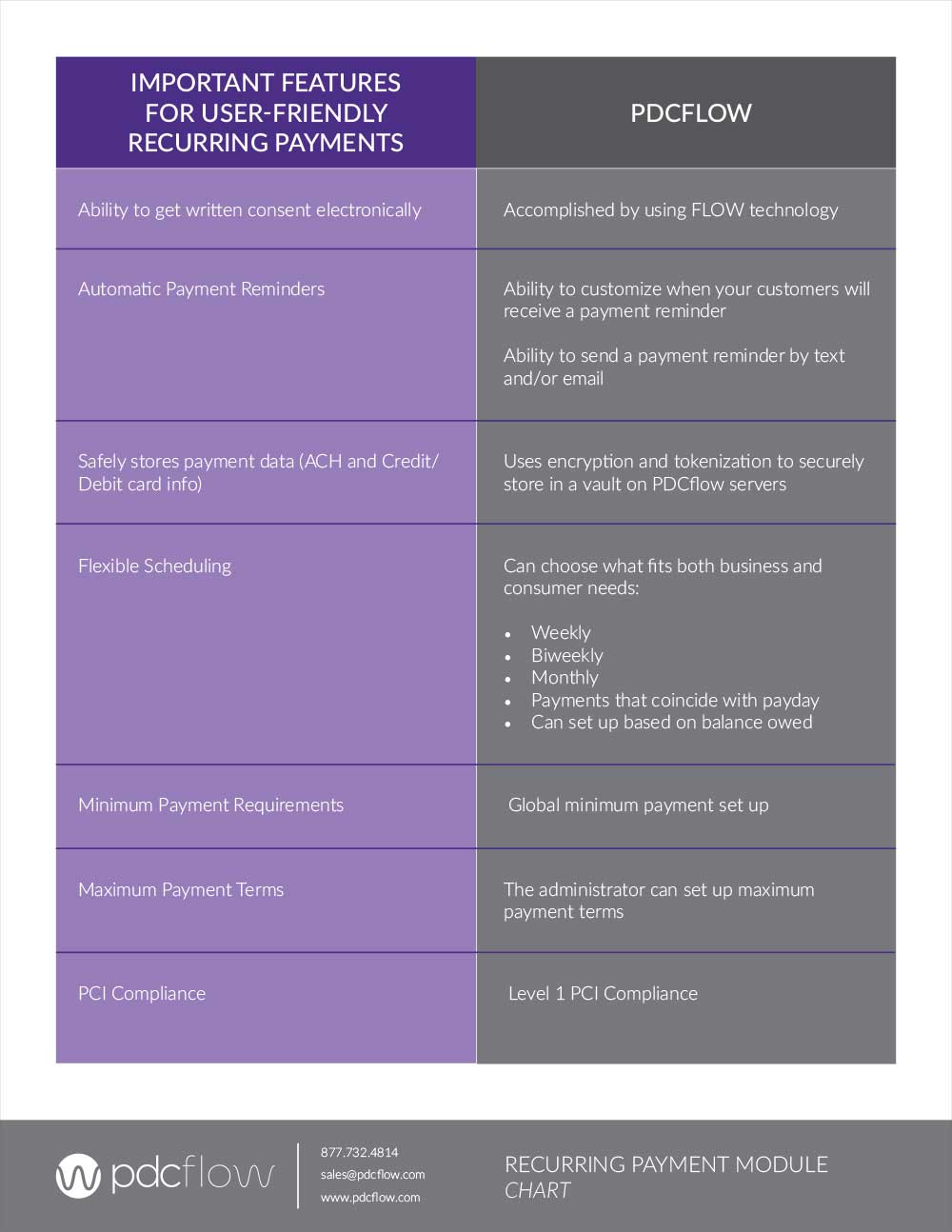
Recurring Billing Software
Key Features
How PDCflow Helps
Get fast approvals for your recurring schedules with PDCflow.
Send payment consent requests via email or SMS for recurring payment schedules, and receive an esignature in minutes.
PDCflow’s recurring payment schedules automatically send a payment reminder.
Specify how many days before a scheduled payment a reminder should be sent.
Reminders include payment details and contact information.
PDCflow offers many options to customize a payment plan that works for your customers.
Choose:
- how frequently payments are processed.
- whether the plan is created using a set payment amount or length of the terms.
- whether to add fees to the payments.
Control the minimum amount any customer is allowed to pay per installment.
Use this global setting to ensure your payment schedules still bring in revenue in the short term.
Control the length of time customers can take to pay the full balance.
Cap how long any recurring schedule can run by limiting the number of payments or length of time customers can choose.
PDCflow makes it easier for your company to adhere to Payment Compliance Industry standards.
Our software captures and stores payment data for businesses, so you don’t have to.
Payment Negotiations
A key part of any successful call center strategy is teaching agents how to confidently negotiate payments. Whether your contact center handles billing support, customer renewals, or collections, these skills are valuable.
Top-Down Negotiation
Train agents in negotiation, and team members will close more payments, improve customer satisfaction, and reduce repeat calls. One of the most effective call center improvement strategies is using top-down negotiation.
This approach begins every conversation with a request for the full payment amount. Setting a pay-in-full expectation gives agents the flexibility to work down to a mutually acceptable figure, rather than starting low and negotiating up.
This method keeps your team in control of the conversation, helping maintain consistency and professionalism across customer calls. It also improves agent performance metrics (average handle time, first-call resolution) since agents are better equipped to reach agreements faster.
However, this technique requires strong training and real-time coaching. Some customers come to the call with a specific number in mind, which can derail even experienced agents.
Role Playing
Include role-playing and quality assurance monitoring in your training program to help agents learn how to redirect conversations, manage objections, and stay focused on resolving the payment efficiently.
By strengthening negotiation tactics, your contact center operations will run more smoothly, creating better outcomes for both your business and your customers.
Collecting on late payments
Even the best-run call centers face customers who miss payment deadlines. That’s why collecting on late payments should be part of every successful call center strategy.
Proactive outreach and clear communication can turn overdue balances into completed payments without damaging the customer relationship.
Follow-Ups
A good call center improvement strategy starts with timely follow-ups.
- Use automated reminders: Nudge a customer to pay before a request expires without manual work from staff. PDCflow reminders can boost engagement up to four times higher than a single payment request.
- Use multi-channel outreach: When used along with calls, channels like email and SMS can increase customer contact rates before accounts become seriously overdue.
These tactics reduce call volumes and improve agent performance, since staff can focus on meaningful conversations rather than endless contact attempts.
Understanding and Flexibility
When an agent reaches a customer, they should approach the conversation as a first-party resolution, not a confrontation.
Train agents to show empathy, acknowledge the customer’s situation, and offer flexible options like short-term payment arrangements or recurring billing schedules. This approach to late payments:
- Enhances customer loyalty
- Reduces average handle times
- Supports your contact center’s quality assurance goals
With the right mix of technology and communication strategy, late payments can become an opportunity to strengthen customer trust (while keeping cash flow consistent and operations efficient).
Improve Call Center Interactions: Teach Agents to Have Better Conversations
Every successful call center strategy relies on one core skill: how effectively agents communicate with customers.
Whether your team handles payments, service questions, or account support, teaching agents to have better conversations is key to improving call center operations and achieving higher customer satisfaction.
When customers are frustrated, confused, or behind on payments, the quality of an agent’s communication can result in resolution or escalation.
That’s why a strong call center improvement strategy should include training on empathy, conversational control, and the right use of language.
Positive Language
Positive language is one of the most effective tools for improving customer interactions. Remove negative phrases and focus on solutions (“Let’s see how we can fix this together”).
Agents can use these positive phrases to:
- Build trust and customer loyalty
- Create a better experience for every caller
- Reduce handle times
Conversational intelligence
Strong call center strategies include teaching conversational intelligence (the ability to balance compliance, empathy, and professionalism). Agents should understand privacy rules and know how to stay compliant, especially in industries that handle sensitive financial or healthcare data.
Knowledgeable, respectful communication improves quality assurance metrics and ensures every phone call aligns with company policy and customer expectations.
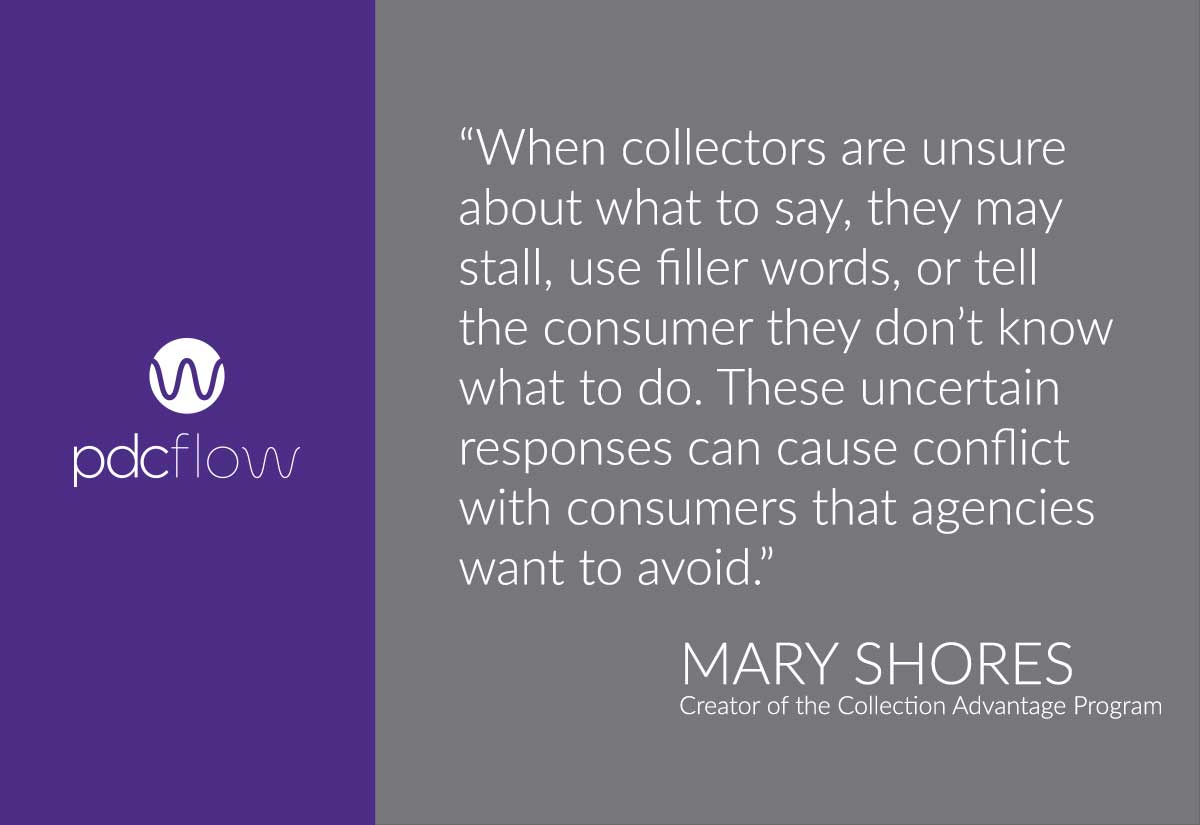
Overcoming stalls and objections
Payment hesitations or service-related objections can quickly derail a conversation. Equip agents with call center improvement techniques that help them keep control of the call.
Train them to identify common stalls and objections (“I need to think about it,” “I’ll call back later”) and respond with empathy while steering the conversation toward resolution. Consistent call monitoring and real-time coaching can reinforce these skills over time.
Empathy
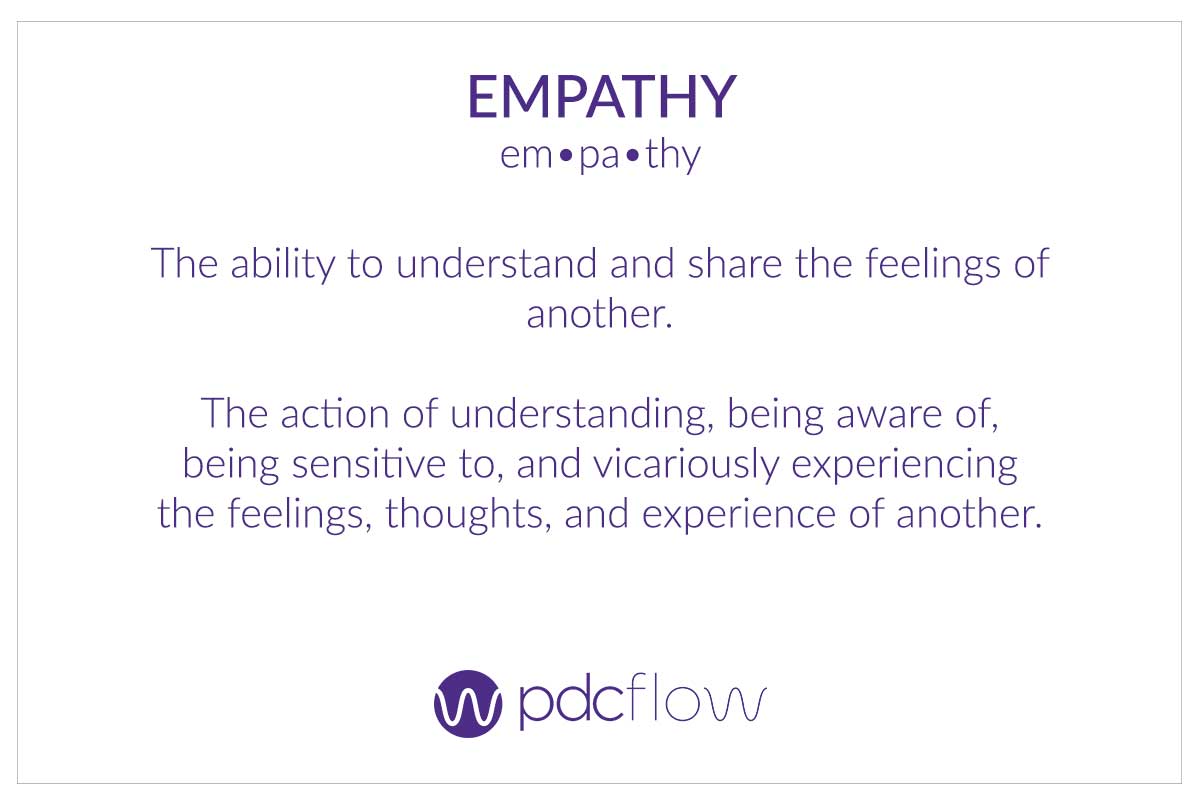
Empathy transforms how customers experience your brand. Life events, financial hardship, or simple confusion can make even loyal customers hesitant to act. An empathetic approach makes customers feel heard.
Teach front-line agents to listen actively and tailor responses to each situation.

Set Agents Up For Success
Even the best call center strategies won’t work without the right support behind them. To build confident, capable agents, companies need to provide:
- Ongoing training
- Clear communication
- Access to up-to-date resources
Regularly update your training materials, call scripts, and internal documentation to reflect changes in policies, procedures, or customer expectations.
When agents have the right information and tools at their fingertips, they perform better. Customers notice the difference.
Training and Call Scripts: Strengthening Your Call Center Team
Call center agents face a variety of customer interactions every day, and even experienced staff benefit from consistent guidance.
To drive measurable improvements, companies should invest in structured training programs and standardized call scripts. These tools help maintain consistent service quality and boost agent confidence.
Call Scripts
Effective call center scripts help agents handle customer calls consistently and professionally. Scripts guide conversations, ensure agents communicate key information, and maintain compliance with internal policies or industry regulations.
They also serve as a training tool for new employees, helping them learn best practices quickly, while reinforcing positive habits in established team members.
Training Techniques
Understand how adults learn to make training more impactful. Short, focused sessions are more effective than long lectures. To help agents practice skills in real-world scenarios, incorporate:
- Role-playing
- Simulated calls
- Call monitoring with feedback
Training programs from industry professionals or trade associations can also provide insights into customer engagement, effective communication, and handling high call volumes.
By combining structured training with practical call scripts, your call center will improve overall agent performance and reduce errors. Support a culture of continuous improvement and workforce development for a confident team of agents.

PDCflow Software for Call Center Operations
For general call center operations, efficiency, consistency, and compliance are key.
PDCflow software provides your team with the tools to send requests more efficiently via email and SMS, adhere to PCI compliance and HIPAA standards, and establish repeatable processes.
By integrating PDCflow into call center workflows, managers cut down on manual work and maintain a high level of customer service.
PDCflow for payment collection
Converting the promise of a payment into a completed transaction can be challenging in any call center. PDCflow’s digital requests solve this problem.
Send payment or signature requests directly to a customer’s mobile phone or email. Agents can stay on the phone while the customer completes the action, ensuring payments are processed and documents are signed.
PDCflow for compliance
Maintaining call center PCI compliance and data security is critical in any company that handles sensitive customer information. PDCflow digital requests remove cardholder data from the hands of agents, letting customers securely enter payment details themselves.
This reduces PCI scope for your organization, protects payment information, and allows agents to focus on delivering a good customer experience (instead of worrying about compliance issues).
PDCflow’s HIPAA-compliant digital requests also simplify documents, forms, and esignatures when you’re not face-to-face. Send and receive sensitive documents with confidence.
PDCflow recurring payments
Recurring payments can be a challenge to manage consistently across teams. PDCflow’s recurring payment module allows managers to control settings like:
- payment frequency
- minimum amounts
- maximum terms
Call center agents can offer flexible plans to customers while avoiding long-term, low-dollar agreements that reduce revenue. This ensures consistent cash flow and allows agents to provide a professional, customer-friendly experience.
Getting a contract and payment together
One challenge in call center operations is keeping customer interactions and administrative tasks coordinated. PDCflow allows agents to send electronic agreements and payment requests together via email or SMS.
This way, agents can complete transactions in real-time while maintaining control of the call, reducing errors, and increasing first-touch resolution rates.
Automated reminders
Automated reminders help call center teams follow up with customers without extra manual work. Agents can schedule reminders before signature, payment, or document requests expire.
This feature not only reduces handle times for customer calls but also improves collection rates and customer satisfaction, supporting better call center operations overall.

Event notifications
Event notifications keep teams informed of key actions in the workflow. Whether it’s a reminder that a document has been opened or a payment request has been completed, notifications provide transparency and accountability.
For call center managers, this improves agent performance and helps teams stay on top of customer interactions across departments.
Ready to see how PDCflow can streamline your call center operations?
Discover how PDCflow’s automated reminders and recurring payment tools can help your agents work more efficiently.
Schedule a live demo to experience how our software simplifies sending digital requests, collecting payments, and managing customer interactions in one secure platform.